
What Makes Traditional Aam Papad Popular: Heritage, Layering Craft, and Regional Flavors
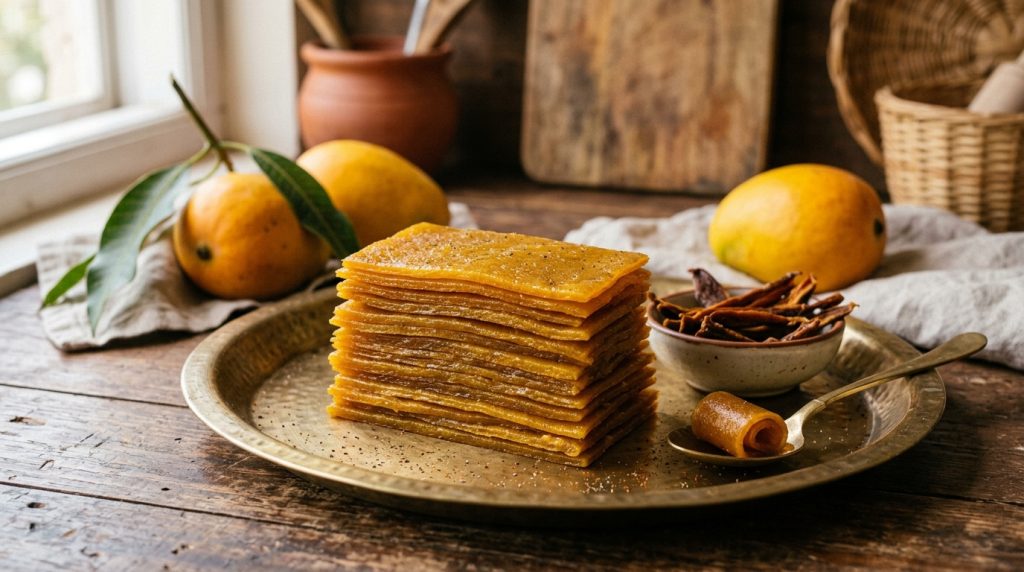
Across India, there is one nostalgic confectionery that immediately conjures childhood memories of summer holidays, grandmother’s terrace, and afternoon snacking: Aam Papad. Known variably as Amawat in Uttar Pradesh, Manga Tira in Kerala, Mamidi Tandra in Andhra Pradesh, and Aamsotto in Bengal, this traditional mango fruit leather is one of India’s most iconic dried fruit delicacies.
In an era dominated by industrially manufactured candies loaded with artificial food colorings and corn syrups, traditional Aam Papad continues to thrive. But what is it about this sun-cured mango treat that has kept it popular across generations? In this exploration, we unpack the artisan craft of making Aam Papad, the difference between regional flavor profiles, and why authentic fruit snacks remain a beloved staple in Indian culinary culture.
The Heritage Craft of Sun-Drying Mango Pulp
The origins of Aam Papad lie in traditional food preservation wisdom. In Indian agrarian life, the mango season—while gloriously abundant—lasts only a few fleeting months during peak summer. To ensure that the golden sweetness of the king of fruits could be relished throughout the monsoon and winter months, rural cooks devised an ingenious sun-drying technique.
The process of crafting authentic artisan Aam Papad requires immense patience, pristine summer sunshine, and meticulous layering:
- Fruit Selection: Ripe, aromatic indigenous mango varieties (such as Dasheri, Chausa, Langra, or Banganapalli) are peeled and their pulp extracted by hand.
- Blending & Seasoning: Depending on whether the batch is intended to be sweet or tangy, the pulp is blended with modest quantities of sugar or jaggery, lemon juice, roasted cumin, and black rock salt.
- The Layering Technique: A thin layer of pulp is spread across smooth cloth, woven reeds, or greased brass trays and placed under direct morning sunlight. Once that initial layer cures and sets, a fresh layer of mango puree is poured on top. This process is repeated day after day until a thick, rich slab comprising dozens of micro-layers is formed.
- Slicing: The final cured slab is peeled off the surface and sliced into squares, diamonds, or rolled into chewy logs ready for storage.
Sweet vs. Tangy Aam Papad: Understanding the Flavor Spectrum
One of the reasons Aam Papad appeals to all palates is its incredible culinary range. Broadly, the snack falls into three beloved categories:
1. Classic Golden Sweet Aam Papad (Mitha Amawat)
Crafted exclusively from fully ripened, honeyed summer mangoes, golden Aam Papad highlights pure fruit sweetness with just enough natural acidity to keep it balanced. It has a glossy, translucent amber color and a tender, melt-in-the-mouth texture that makes it an ideal post-meal dessert bite.
2. Spicy and Tangy Khatta-Meetha Aam Papad
A favorite of street-food aficionados in Amritsar and Delhi, this variety combines ripe mango pulp with raw green mango (kacha aam) and a bold dusting of ground black salt, chaat masala, and dried ginger. The resulting chew delivers a thrilling burst of tartness, savouriness, and gentle sweetness in every bite.
3. Dark Aged Black Aam Papad
Specialty regions in Uttar Pradesh and Bengal produce a distinctive deep-brown or black Aam Papad. By gently simmering the mango pulp in iron vessels before slow-drying, the sugars caramelize, yielding a robust, molasses-like depth and firmer chew that connoisseurs seek out.
Why Aam Papad is Superior to Modern Processed Fruit Snacks
Many modern supermarket fruit snacks and gummies contain little actual fruit, relying instead on gelatin, refined corn syrup, artificial food dyes, and chemical flavor mimics. In contrast, authentic traditional Aam Papad offers distinct advantages:
- Genuine Fruit Fiber & Pulp: Authentic recipes utilize pure mango puree as the primary foundation, retaining the natural fruit fibers, vitamins, and carotenes inherent to mangoes.
- Naturally Vegetarian & Gelatin-Free: Traditional Aam Papad achieves its signature chew purely through the natural pectin of mangoes and evaporation of moisture under the sun, without animal gelatins or synthetic gums.
- Satisfying Sensory Texture: The layered construction provides a uniquely elastic, toothsome bite that delivers long-lasting fruit satisfaction rather than a quick burst of refined sugar.
Pairing and Serving Ideas
While Aam Papad is irresistible when eaten directly from the wrapper, creative food lovers enjoy pairing it with other classic pantry items:
- Afternoon Tea Companion: Serve thin slices of tangy Aam Papad alongside a hot cup of spiced masala chai or a chilled glass of Traditional Summer Sharbat.
- Cheese & Charcuterie Platters: The sweet and tart profile of mango fruit leather makes it a brilliant partner for sharp cheeses, roasted almonds, and walnuts on entertaining platters.
- Dessert Garnish: Finely chop sweet Aam Papad and sprinkle it over vanilla bean ice cream, mango shrikhand, or traditional rice kheer for bursts of chewy fruit flavor.
Key Takeaways
- Aam Papad is a traditional Indian mango fruit leather born from generations of sun-curing food preservation techniques.
- The distinctive layered texture is created through sequential drying of thin mango puree coats over multiple days.
- Varieties span from pure honeyed sweet to mouth-watering spicy and tangy khatta-meetha blends.
- It represents an authentic, gelatin-free, fruit-forward snacking alternative to synthetic confectioneries.
Frequently Asked Questions (FAQ)
How long does traditional Aam Papad last?
When kept in an airtight container in a cool, dry pantry, properly dried Aam Papad has an impressive shelf life of 6 to 12 months. Refrigeration is not strictly necessary but can help preserve moisture and softness in hot, dry climates.
Is Aam Papad suitable for vegetarians and vegans?
Yes. Authentic Aam Papad is made entirely from plant-derived ingredients—primarily mango pulp, sugar or jaggery, lemon juice, and ground spices—making it 100% vegetarian and vegan-friendly.
Why is some Aam Papad dark brown while others are bright yellow?
The color depends on the mango variety used, the drying temperature, and whether the pulp was cooked before drying. Sun-dried raw mango puree remains bright yellow-orange, while slowly cooked or iron-vessel reduced pulps develop deep amber to black caramelized shades.
Traditional Layered Aam Papad & Fruit Leather Snack Assortment
Conclusion & Call to Action
Traditional Aam Papad is much more than a sweet indulgence; it is an enduring tribute to India’s culinary ingenuity and love for the summer mango harvest. By supporting authentic regional producers who preserve the time-honored craft of sun-drying real fruit, you can enjoy a wholesome, flavor-packed snack that never goes out of style.
Pair your next snack break with our in-depth review of Pansari Aloo Bukhara Sharbat for the ultimate combination of traditional Indian fruit flavors!
Leave a Reply